Pokémon card value checker.
Search a graded Pokémon card by name, set, card number, certification number or Solana mint. Compare its current asking price with its insured reference, then inspect bids, population and market history on the individual card page.
Free, read-only and no login required · Reviewed · Independent data tool, not an appraisal
Current Pokémon card asking prices
Recent credible USDC listings of Collector Crypt cards, on Collector Crypt or Magic Eden as labelled. This snapshot is cached for up to five minutes. Asking prices and insured references are comparison inputs, not guaranteed sale values.
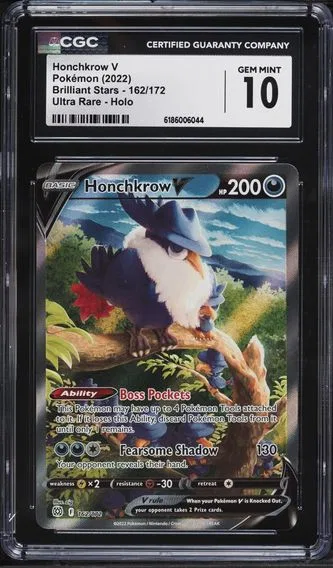
2022 #162 Honchkrow V CGC 10 Pokemon Sword & Shield Brilliant Stars Full Art
- ASKING
- $25.35
- INSURED REF.
- $21
On Collector Crypt · updated
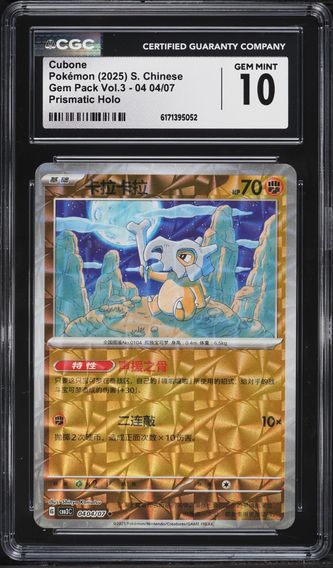
2025 Pokemon Chinese SV Gem Pack Vol.3 Prismatic Holo Cubone #04 04 CGC 10 GEM MINT
- ASKING
- $42.85
- INSURED REF.
- $26
On Collector Crypt · updated
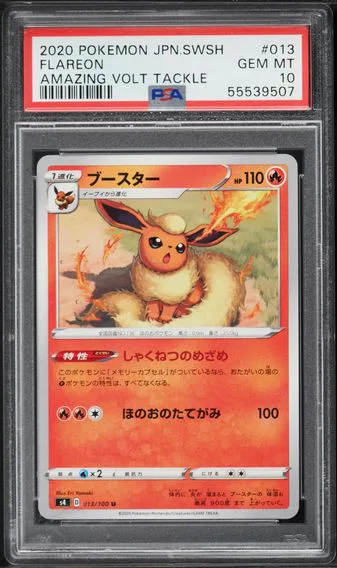
2020 #013 Flareon PSA 10 Japanese Sword & Shield Amazing Volt Tackle Pokemon
- ASKING
- $104
- INSURED REF.
- $32
On Collector Crypt · updated
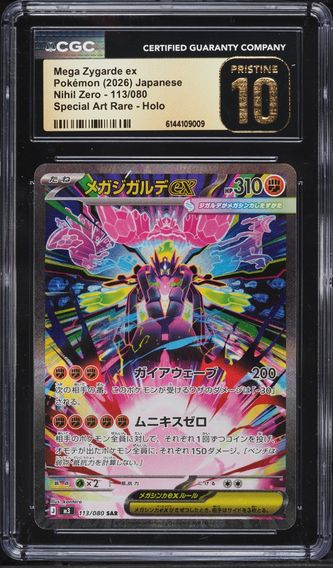
2026 Pokemon Japanese Mega Nihil Zero SAR Mega Zygarde ex #113 CGC 10 PRISTINE
- ASKING
- $46.50
- INSURED REF.
- $50
Asking 7% under insured value
On Collector Crypt · updated
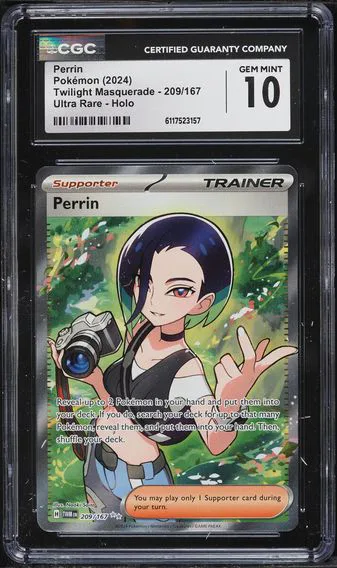
2024 Pokemon Scarlet & Violet Twilight Masquerade Full Art Perrin #209 CGC 10 GEM MINT
- ASKING
- $26.97
- INSURED REF.
- $29
Asking 7% under insured value
On Collector Crypt · updated
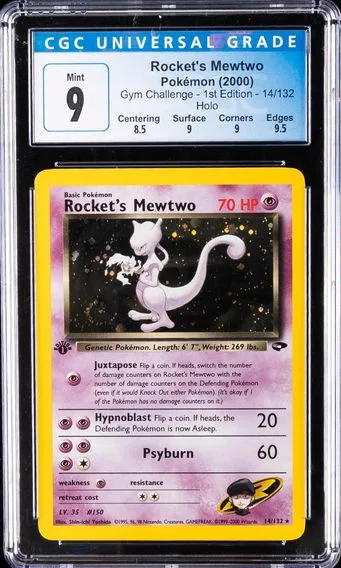
2000 #14 Rocket's Mewtwo Holo-1st Edition CGC 9 Gym Challenge Pokemon
- ASKING
- $1,199
- INSURED REF.
- $1,175
On Collector Crypt · updated
How to check a Pokémon card's value
1. Identify the exact card
Match the year, set, card number, language, parallel, edition and autograph status. A familiar character name is not enough.
2. Confirm the slab
Check the grading company, numeric grade and certification number. Compare the physical label with the grader's record.
3. Compare executable demand
Recent accepted sales and active bids show what buyers paid or may pay. An unsold asking price only shows what one seller wants.
4. Adjust for scarcity and liquidity
Review grade population, copies graded higher, listing depth and transaction activity. Scarcity matters only when collectors also want the card.
Open an individual Decard card page to bring the identity, grade, certificate, asking price, insured value, best bid, population report and decoded on-chain history together. No single field is a complete valuation.
Asking price, insured value and market value are different
A listing price is the seller's current request. It does not prove that a buyer will accept it. An insured value is a reference supplied with the vaulted card. It is useful for comparison, but it is not a guaranteed payout, appraisal or future sale price.
Decard's deal score measures how far a USDC asking price sits below insured value. For example, a card insured at $100 and listed at $80 scores 20. That means “listed 20% below the insured reference,” not “guaranteed 20% profit.”
A stronger estimate combines recent accepted sales, active bids, comparable listings, the exact grade and the card's population. Thinly traded slabs can have a large gap between the visible asking price and the price a buyer will actually pay.
What determines a PSA Pokémon card's value?
PSA 10 is the highest standard numeric grade, but it does not make every card expensive. Character demand, set, print year, language, edition, card number, artwork, rarity and population all affect value. A PSA 9 can be scarcer or more actively collected than an unrelated PSA 10.
There is no reliable universal multiplier from raw to PSA 9 or PSA 10. Grading cost, authentication risk, condition uncertainty and the number of high-grade copies change card by card. Compare the same printing and grade whenever possible.
Learn PSA, CGC, BGS and population terms→What this checker can and cannot tell you
Decard covers professionally graded physical cards represented on Collector Crypt and listed across its connected marketplace data. It does not estimate raw-card condition, promise authenticity beyond the displayed grader and custodian records, or predict a future price.
Marketplace availability, bids, insured values and redemption terms can change. Verify the current card, certification, listing, custodian and withdrawal terms before making a decision. Decard is independent, fan-made and not affiliated with PSA, Nintendo, Creatures, GAME FREAK, The Pokémon Company, Collector Crypt or Magic Eden.
Common Pokémon card value questions
How much is my Pokémon card worth?
Identify the exact printing and condition first, then compare the same card and grade using accepted sales, active bids and credible listings. A card name alone cannot produce a reliable value.
Does a PSA 10 grade guarantee a high value?
No. Grade describes condition and authentication. Demand, rarity, population and liquidity determine whether collectors will pay a premium.
Should I use asking prices or sold prices?
Use both, but give more weight to recent comparable sales and executable bids. Asking prices reveal supply and seller expectations, including listings that may never sell.
Is Decard free?
Yes. Research pages are public and read-only, and checking a card does not require a wallet or account.